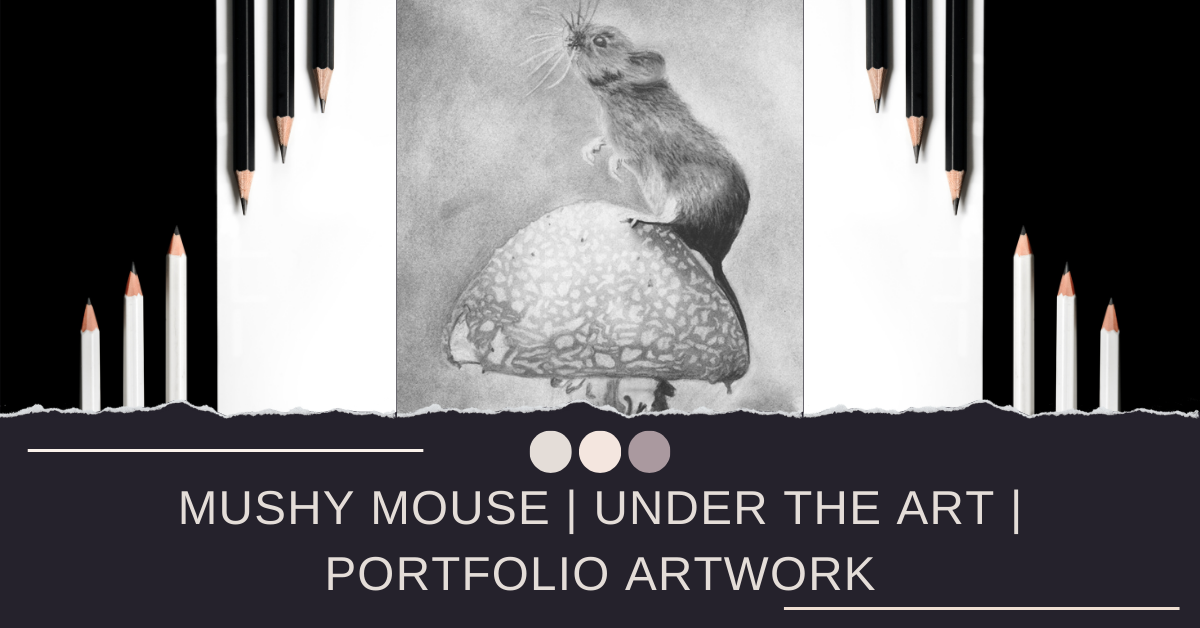
Executing small-scale wildlife subjects in traditional monochrome charcoal presents a severe technical challange: replicating the weightless, organic textures of animal fur without losing the underlaying anatomical geometry. Without prcise value mapping and calucated tools handling, fine biological details can easily bleed together, causing the drawing to collapse into a flat, chaotic smudge.
Mushy Mouse serves as a definitive studio study in micro-texturing and focal isolation, demanding an uncompromising approach to surface depth and extreme value contrast.
I. The Mechanics of Organic Texturing
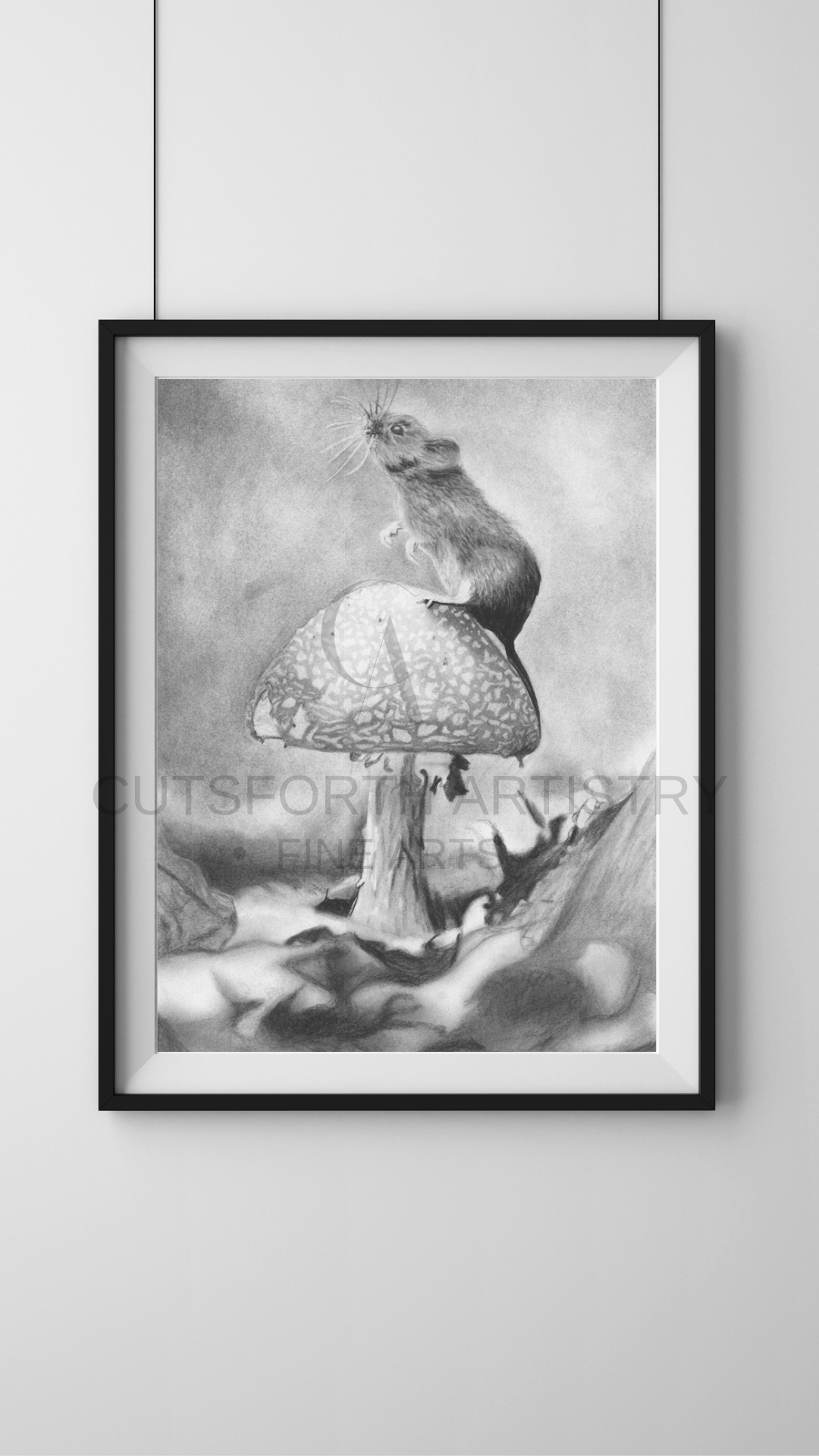
To capture the complex tactile nature of wildlife fur, the studio utilized a multi-layered, subtractive drafting process. The illusion of soft coat layers requires treating the paper surface as a fluid landscape of light and shadow:
- The Carbon Base: A smooth, diffused foundation of natural willow charcoal dust was rubbed directly into the cotton fibers using soft studio brushes. This established the foundational mis-tone shadow structure, mapping out the mouse’s physical mass and musculature.
- The Subtractive Fracture: To render the indivdual hairs of the fur, the studio used razor-sharpened polymer eraser under an exceptionally steady hand to slice through the charcoal dust. This subtractive sculpting technique lifts the carbon away, exposing the raw, white cotton tooth of the paper to generate crisp, light-reflective highlights that catch natural ambient glare.
II. Tonal Saturation and Facial Elements
To ensure the composition commands visual authority across a room, the central focal points-the eye and the structural contours of the face-were locked down with high-density, matte-compressed mineral carbon.
By applying intense, targeted pressure to the iris and deep shadows recesses, the paper surface ceases to reflect light. This total light absorption creates a velvet shadow abyss that contrasts beautifully with the soft, loose charcoal dust of the body, giving the small subject an immense sense of life, weight and stillness within the frame.
III. Provenance and Edition Parameters
In strict compliance with the studio’s preservation mandate, the original master drawing of Mushy Mouse remains permanently secured within the private vault of Cutsforth Artistry and is not open for commercial aquisition.
Museum-grade fine art giclée reproductions are struck on heavyweight, 310gsm acid-free cotton rag paper using lightfast mineral pigments. Every single print undergoes a rigorous visual quality audit and is individually hand-signed by the artist in traditional graphite pencil on the lower boarder to secure long-term collector value and authentic studio provenance.
Contextual Records:
- Tonal Execution: Review the advanced rules of value density and micro-precision used for small-scale subjects in Monograph: Microscopic Precision and Value Density in Miniature Studies.
- The Archival Standard: Explore the strict chemical standards, printing resolution, and paper tooth requirements of each hand-signed print tiers in Code of Operations: Term of Acquisition, Commissions, Print Protocols
The Carbon Folio Registry
The studio’s wildlife monographs, technical paper, and private collection releases are archived exclusively for registered collectors. Access to seasonal release windows is strictly regulated.