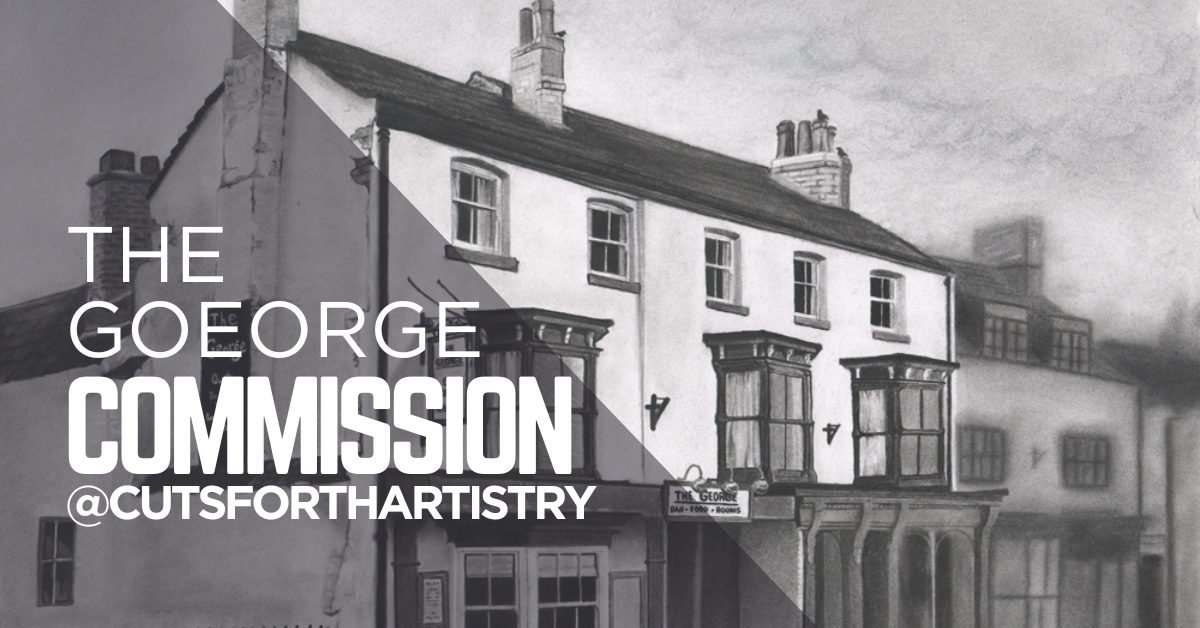
Bespoke architectural fine art commissions serve as permanent, material markers of regional history. When a custom drawing is structurally scaled to integrate directly into the physical space it depicts, it transcends standard illustration and becomes a permanent part of that building’s heritage.
This monograph records the structural execution and permanent on-site placement of the studio’s major architectural study, The George in Kirton in Lindsey. Commissioned specifically to celebrate the 17th-century coaching inn, the final piece is now housed as a permanent asset within the establishment’s private collection.
I. The Mechanics of Structural Drafting
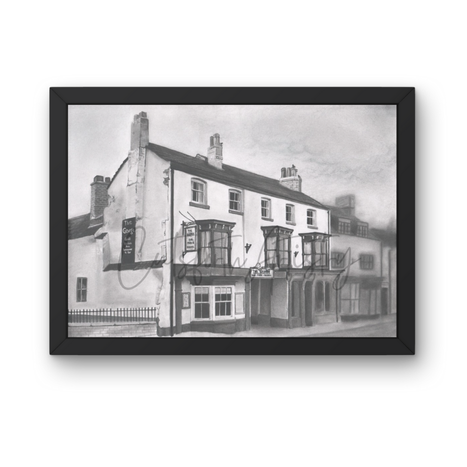
The baseline challenge of rendering complex historic architecture is preventing the linear perspectives from warping or losing structural stability. To guarantee total accuracy, the studio enforced a strict structural framework at the easel:
- Geometric Construction: Before raw carbon touched the paper, the underlaying perspective lines were mapped out with absolute finality. Every structural silhouette, window axis, and historical timber boundary was drafted using technical linear rulers and an exceptionally steady hand. This precise methodology creates an intentional, hand-edged foundation that prevents the historic coaching inn from looking distorted under close inspection.
- Tonal Materiality: To differentiate between the weathered textures of the building’s facade and the ambient glass reflections, the studio deployed a varied layering protocol. Hard, high-density compressed carbon was packed into the shadow recesses to anchor the building’s visual weight, while soft willow charcoal gradients were mapped across the brickwork to mimic historical aging.
II. Subtractive Light Control and Extreme Contrast
To give The George its striking commanding presence, the ambient sky and highlights cutting across the architectural edges were not drawn on top; they were physically carved out of pre-existing shadows.
- The Light Capture: Using precision mechanical polymer erasers, fields of loose charcoal dust were systematically lifted away to expose the raw, white cotton tooth of the paper. This subtractive technique creates crips, light-reflective boundaries that mimic the harsh glare of daylight striking historic plaster.
- Tonal Unification: To prevent the hard edges from looking erratic, transition zones were meticulously smoothed using dense paper tortillons and dry studio blending brushes. This mechanical step removes accidental hard lines, anchoring the town landmark in a silent, permanent atmosphere.
III. Public Placement and Acquisition Provenance
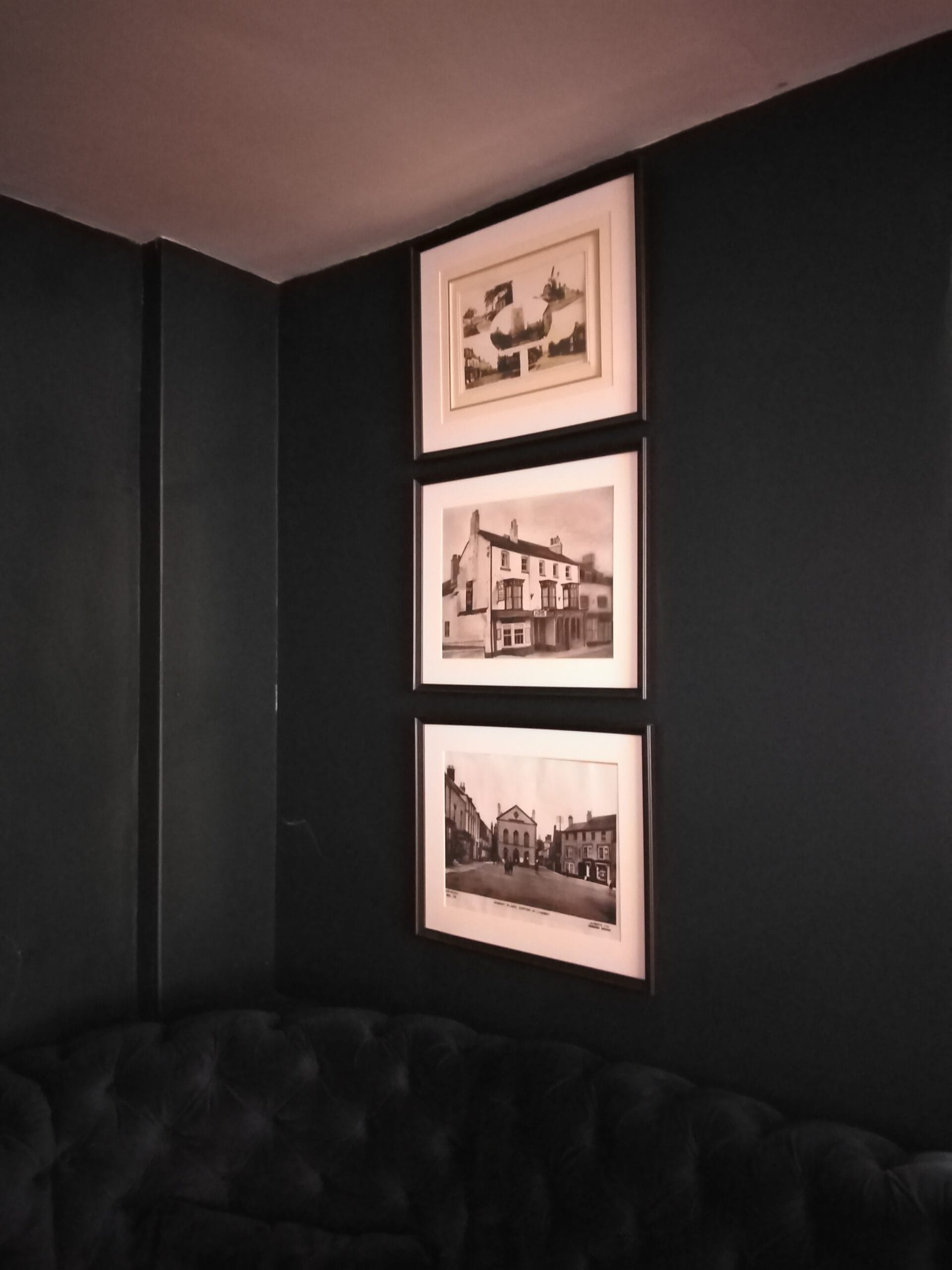
Because the original master drawing of The George was executed as an exclusive private commission, it is closed to public market acquisition. Fine art investors and visitors can view the original work hanging permanently in its historic spatial context at the property on the High Street in Kirton in Lindsey.
To protect the long-term asset value of this commission, museum-grade fine art giclée reproductions are managed under strict scarcity parameters. Struck on heavyweight, 310gsm acid-free cotton rag paper using lightfast mineral pigments, every print is hand-signed by the artist in traditional graphite pencil on the lower right side to guarantee lifelong studio provenance.
Contextual Records:
- Bespoke Folio: Observe how these custom contract boundaries and structural landscaping methodologies are applied to large-scale rural estates in Monograph: Structural Integration in Agricultural Landscapes.
- The Archival Standard: Review the strict non-negotiable operational boundaries, deposit criteria, and framing handling rules enforced for custom client projects in Code of Operations: Term of Acquisition, Commissions, and Print Protocols.
The Carbon Folio Registry
The private commission ledger is restricted to seasonal allocation windows to protect the intense labor required for each master drawing. Admission to the booking window is strictly regulated.