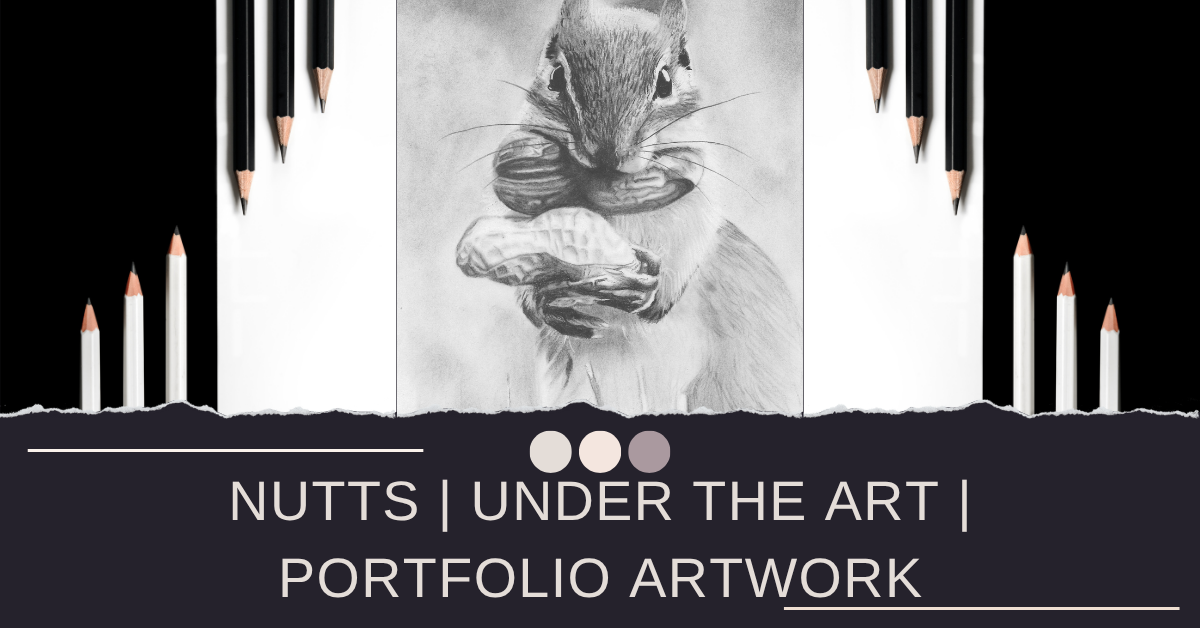
Rendering the delicate, multi-layered fur patterns of small wildlife subjects in traditional monochrome charcoal presents an exacting test of tonal control. Without a calculated approach to layering and erasure, the fine, overlapping strands of a coat will bleed together, causing the anatomical forms to collapse into a flat, characterless field of grey.
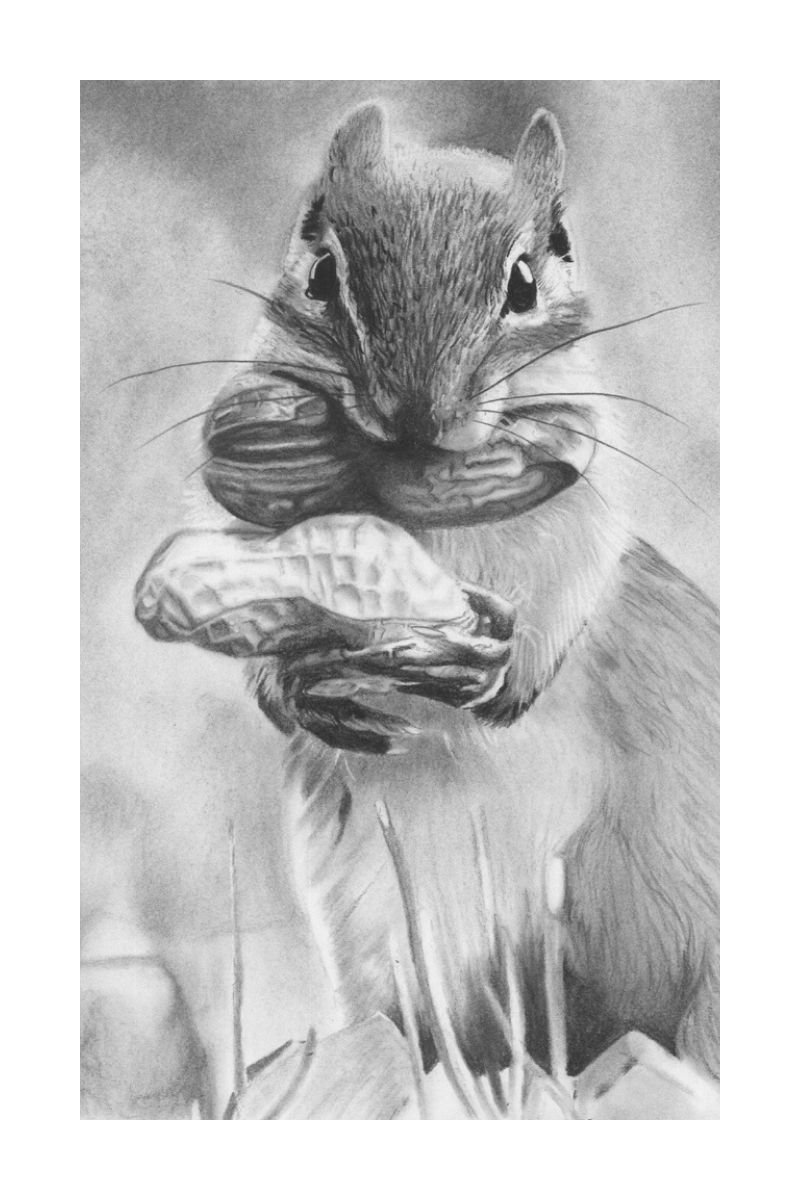
Nutts is a definitive studio study in value allocation, demonstrating how to isolate dense, organic textures against a clean backdrop while maintaining total structural geometry.
I. The Mechanics of Fur Replication
The illusion of a thick, tactile coat requires treating the paper surface as a multi-dimensional canvas of carbon density. The studio deployed a systematic, multi-tiered drafting process to capture this organic complexity:
- The Foundation Layer: A smooth, diffused base of volatile willow charcoal dust was rubbed directly into the cotton paper fibers using specialized studio blending brushes. This established the deep mid-tones and shadowed musculature, anchoring the squirrel’s physical presence and weight before any fine texturing occurred.
- The Subtractive Cut: Individual hairs and soft tail textures were not drawn over the top using light pigments. Instead, the studio used razor-sharpened polymer erasers under an exceptionally steady hand to slice through the charcoal dust. This subtractive sculpting technique permanently lifts the carbon away, exposing the pristine, white tooth of the paper to generate sharp, light reflective highlights that mimic natural ambient glare.
II. Focal Isolation and Contrast Anchors
To ensure the small wildlife subject commands immediate visual authority from across a room, the central expressive features- the eye, the claws, and the nut-were locked down using high-density, matte-compressed mineral carbon.
By applying intense, targeted pressure to these crucial focal points, the paper surface ceases to reflect ambient gallery light. This total light absorption creates a velvet shadow abyss that provides a powerful structural counterweight to the softer, loose charcoal textures of the fur, freezing the swift subject in an absolute, unyielding moment of stillness.
III. Provenance and Acquisition Framework
Following the strict preservation mandate of the studio, the original master drawing of Nutts is permanently secured within the private archive of Cutsforth Artistry and is closed to the public market.
Archival fine art giclée reproductions are struck on museum-grade, 310gsm acid-free cotton rag paper featuring a pronounced, non-reflective matte “tooth” that mirrors the physical texture of the paper at the studio easel. Following a rigorous visual quality audit, every print is individually hand-signed by the artist in traditional graphite pencil on the lower border to secure authentic studio provenance for collectors.
Contextual Record:
- Tonal Execution: Observe how these exact micro-texturing methods are applied to other organic, small-scale subjects in Monograph 04: Micro-Texturing and Focal Isolation in Wildlife Studies.
- The Archival Standard: Explore the strict physical parameters, lightfast mineral pigments, and structural criteria required to translate these carbon textures into prints in Technical Paper: Structural Standards for Museum-Grade Digital Replication.
The Carbon Folio Registry
The studio’s wildlife records, technical papers, and private collection releases are archived exclusively for registered collectors. Access to seasonal release window is strictly regulated.