
Documenting the physical installation of fine art is an essential process in establishing long-term regional provenance. Public showcases allow a studio’s physical output to step outside the isolated, controlled lighting of the easel and interact directly with a dynamic gallery environment.
This record archives the structural setup, spatial constraints, and curated lighting parameters executed by the studio for the Kirton in Lindsey Annual Art Exhibition housed within the historic Diamond Jubilee Town Hall.
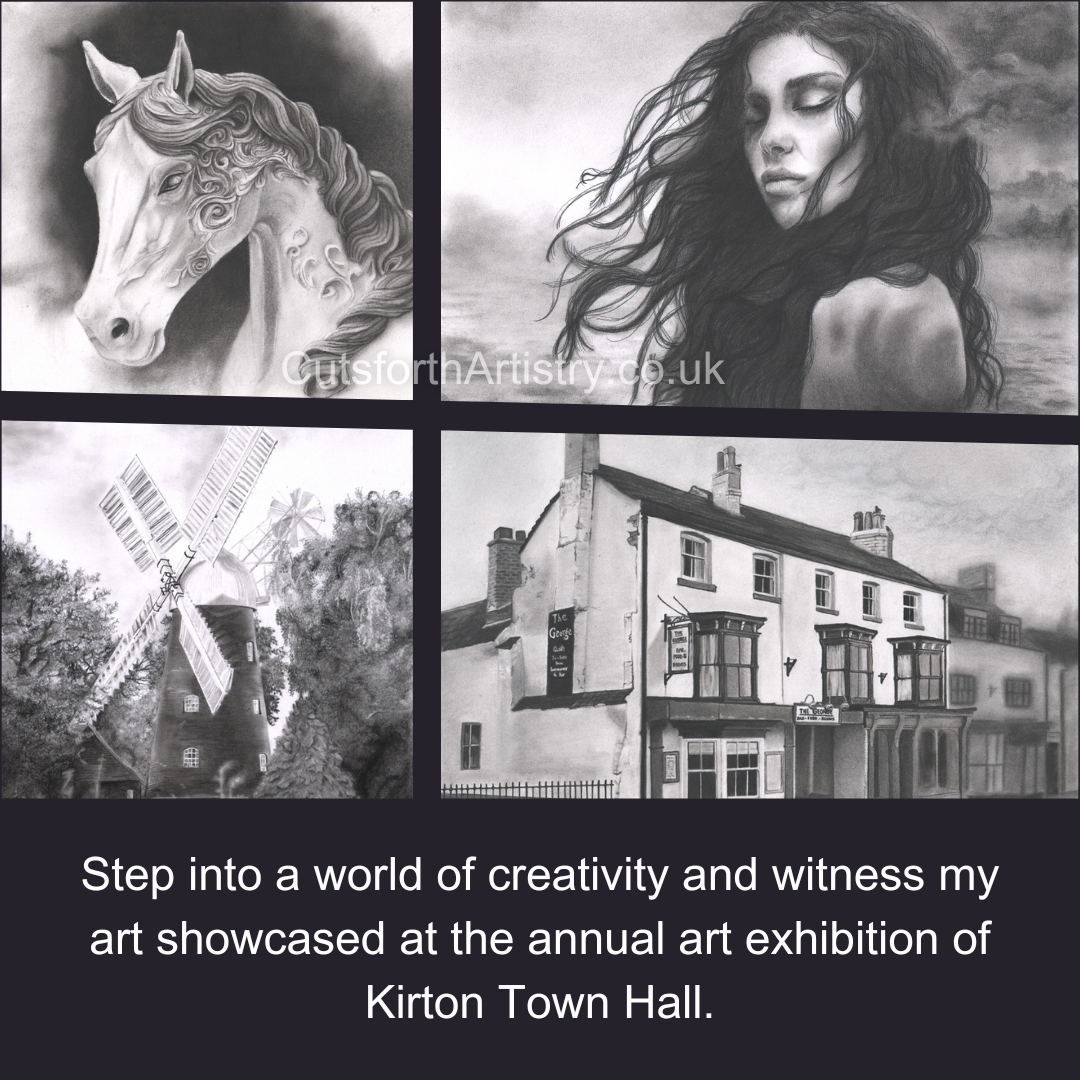
I. Environmental Dynamics: Matte Carbon vs. Ambient Light
Installing traditional monochrome charcoal within a multi-medium exhibition space-where pieces are viewed alongside liquid-sheen oil paintings, glass craft, and reflective glazes-demand strict tonal separation. Colour-heavy surroundings can visually distract the eye; however, pure carbon creates a commanding zone of architectural stillness.
During the installation phase, the studio carefully analyzed the venue’s natural and artificial light pathways:
- The Glare Matrix: Standard display spaces suffer from cross-reflections caused by nearby windows and moving crowds. Because the studio’s high-density compressed charcoal acts as a natural light trap, absorbing ambient rays entirely, the work maintained its deep, vevet-black values regardless of shifting angles.
- The Spatial Anchor: By framing the collections in clean, non-reflective museum borders, the high-contrast pieces functioned as immediate visual stabilizers, drawing viewers away from the transient room traffic and into the sharp, unyielding linework of the drawing.
II. Verification of Public Provenance and Regional Assets
For the dedicated fine art investor, an artist’s multi-year footprint within established regional exhibitions provides objective validations of consistency and growing market presence. This showcase served as a vital touchpoint, translating the studio’s techincal standards into verified public receipts.
The high-volume reception of pieces like the landmark studies confirms an ongoing commercial reality: collectors are actively seeking out slow-crafted, traditional monochrome assets that reject the rapid, disposable nature of modern digital printing.
III. Post-Exhibition Conservation Mandate
Following the close of the public display window, all exhibited original master files were returned directly to the secure vaults of Cutsforth Artistry to protect their structural integrity.
To preserve long-term historical and asset value, limited-edition giclée prints derived from these exhibited masters are catalogued and struck exclusively on heavyweight, 310gsm cotton rag paper for registered collectors.
Contextual Record:
- Provenance & Exhibition: Review the historical tracking and previous showcase footprints within the regional registry in Record of Exhibition: The 14th Annual Kirton Registry.
- Tonal Execution: Explore the architectural drafting mechanics and ruler techniques used to render historic landmarks in Monograph: Contrast Dynamics in ‘Retford Market Poppies’
The Carbon Folio Registry
The studio’s public showcase logs, regional collections, and private acquisitions are recorded exclusively for fine art collectors. Access to seasonal releases is granted via the secure studio register.